Common Ostrich
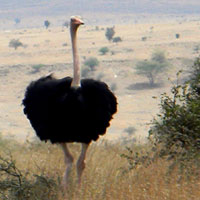
The largest living bird. Runs fast, kicks hard, and doesn't fly.
Marabou Stork
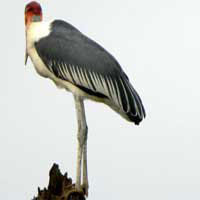
Large conspicuous bird common near farms, marshes, and even in cities. Comes to carrion and visits garbage dumps.
Yellow-billed Stork
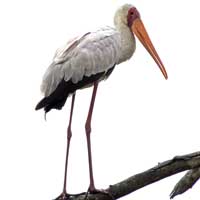
Huge yellow bill on white bird with black wing feathers. Often wades in shallow water.
White Stork
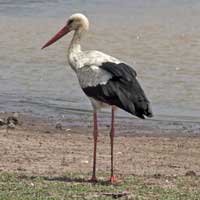
From Europe and Asia these elegant birds migrate to Kenya for the winter.
Hamerkop
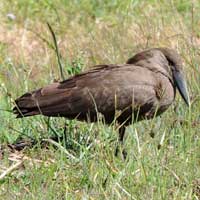
Striking bird of wet land edges with heavy bill and hammer-like crest on head. Uniform gray-brown color.
Hadada Ibis
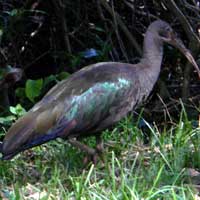
In flight these birds seem to announce 'HADADA' over and over. Glossy black-green. Bill and legs shorter than other ibises.
Sacred Ibis
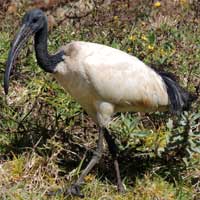
Large black and white bird of marshy shores and pastures. Black head and neck bare, w/o feathers.
African Spoonbill
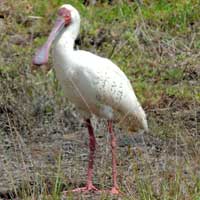
White wading bird with long, pink legs and a large bill that is flattened and expanded distally.
Great Egret
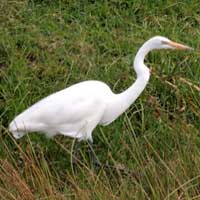
Large white heron with long neck and yellow-orange bill. Gape line from bill extends to behind eye. Also called Common Egret.
Black-headed Heron
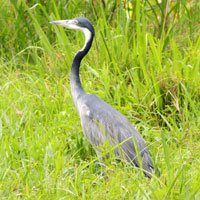
Large with dark crown. long neck and grayish bill. Legs and feet dark.
More Herons and EgretsGreat White Pelican
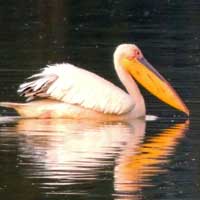
Unmistakeable huge white bird with large pelican bill. Freash water lakes mostly.
Little Grebe
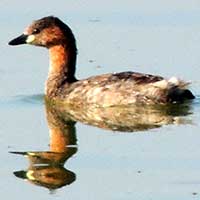
Diving bird resembles small duck. Short, acute bill. Fresh water lakes mostly.
African Darter
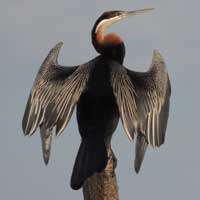
Diving water bird with long snake-like neck. Holds wings to dry after diving.
Reed Cormorant
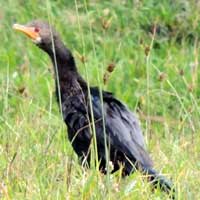
Largely black water bird that must dry feathers before flying. Dives under water after fish. Tail long.
Great Cormorant
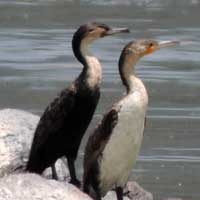
Larger and heavier bodied. Neck and upper breast of adult is white (in contrast to other world populations).
Greater Flamingo
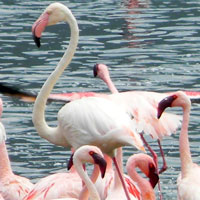
Amazing pink bird with long graceful neck. Bill is also largely pink but with a dark tip. (Lesser Flamingos in foreground.)
Lesser Flamingo
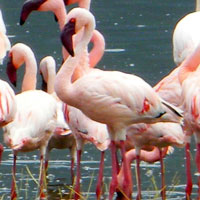
Bill is solid dark red and the flamingo stands considerably shorter than the greater.
Helmeted Guineafowl
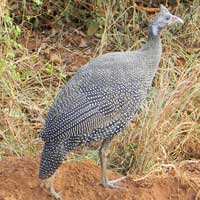
Large terrestrial bird with long neck, face w/ blue and red, stiff crest on head, and bulky speckled belly.
Yellow-necked Spurfowl
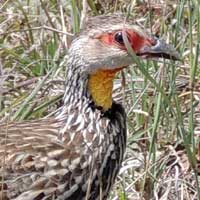
Pheasant like bird with featherless, bright yellow skin patch on neck. Relatively large, stocky birds
Jackson's Francolin
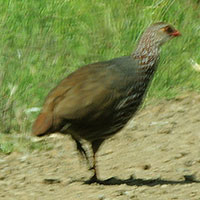
Heavy set ground bird mostly of high grassland areas. Neck and belly are rusty brown with white-edged feathers.
Egyptian Goose
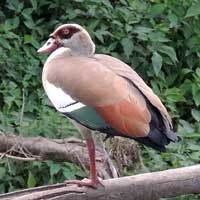
Heavily built duck with long legs. Shades of gray, brown and white. Red-brown patch about the eyes.
Yellow-billed Duck
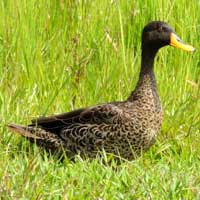
Handsome gray duck with yellow bill. Inhabits shallow fresh water ponds and river edges.
Red-knobbed Coot
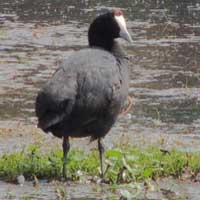
Glossy-black water bird with bright white bill and two reddish knobs projecting above the forehead. Dives under to eat plants.
Purple Swamphen
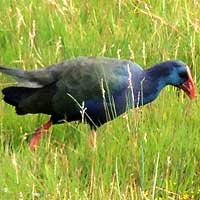
Water bird with glossy purple-black plumage and red bill. Resembles, but is not related to, ducks.
More Rails, Coots and MoorhensGray Crowned Crane
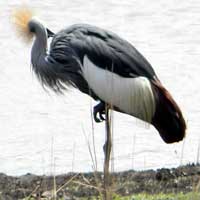
Iconic African bird with long legs and crest of golden feathers. Grassy meadows often near water. Largely gray with black and white markings.
Rüppell's Vulture
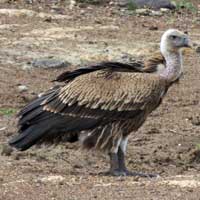
Large vulture. Mottled brown and black with whitish underbelly. Head and neck white.
Augur Buzzard
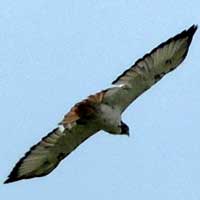
When soaring overhead look for dark head, white chest and belly, light underside, and reddish-brown tail. Preys on small mammals.
Black Kite
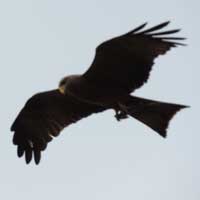
Soaring Black Kites are a ubiquitous site in both farming and urban areas of Kenya. The forked tail and nearly uniform dark brown plumage make them easy to recognize.
Secretarybird
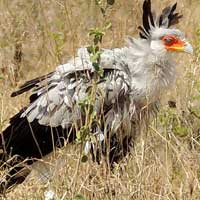
Large ground bird with feathery crest and strong, hooked predator beak. Open grassland or savanna habitat.
Verreaux's Eagle Owl
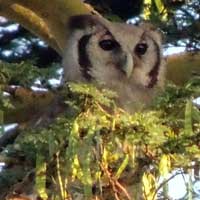
Big owl with pink eyelids and a black border around a white facial disc.
African Scops Owl
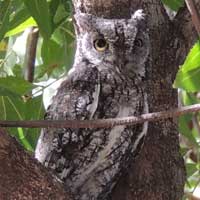
Small-sized, streaked owl with distinct ear tufts.
Slender-tailed Nightjar
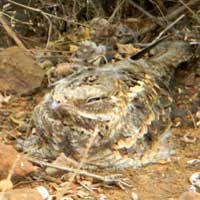
Nocturnal bird that sleeps under shrubs by day. Highly cryptic plumage to look like rock or scrap of wood.
White-bellied Bustard
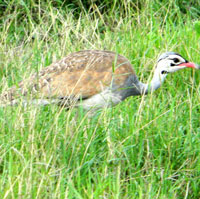
Large terrestrial bird that feed on ground, but capable of flight. Sides of face boldly marked contrasting reddish bill.
Kori Bustard
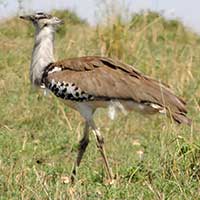
Very large, indeed the largest flying bird of Africa. It hunts for lizards, grasshoppers and other small animals in savanna.
Water Thick-knee
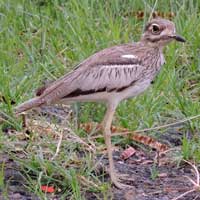
The oversized eyes are for seeing invertebrate prey at water's edge at dawn and dusk.
Spotted Thick-knee
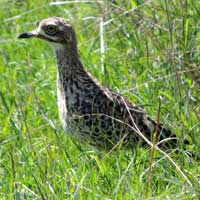
Large rounded head and big eyes on a long-legged bird of grassland savanna. Largely nocturnal or crepuscular.
Temminck's Courser
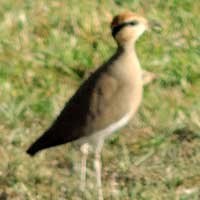
Wader-type bird that inhabits open ground in savannas. Bright rufous cap bordered by black below. White underbelly.
Double-banded Courser
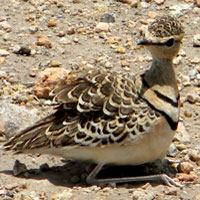
A ground-dwelling bird with terra-colored plumage and huge dark eyes. Two dark bands across upper breast. Most active dawn and dusk.
Three-banded Courser
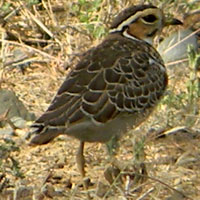
Hides on ground below shrubs during most of day with highly camouflaged plumage. Active dawn and dusk.
African Jacana
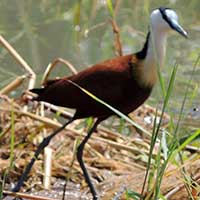
Very long toes permit these wetland birds to walk atop floating vegetation.
Black-smith Plover
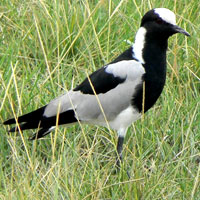
Similar to Spur-winged Plover. Bold white, black and gray, but notice this one has a white cap. Frequents shorelines and also short grass open areas.
African Wattled Lapwing
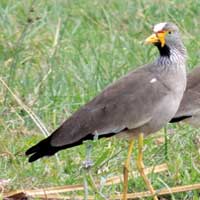
Distinctive shore bird with long yellow legs and fleshy wattles on the face.
Common Sandpiper
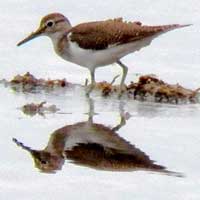
From September to April one of the more common shorebirds along lakes, rivers and ocean shore. Notice white crescent on shoulder.
Wood Sandpiper
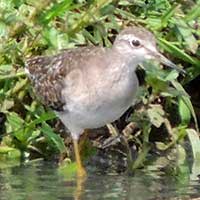
Yellowish legs, back spotted with white on dark brown and fairly distinct white eyebrow. Northern migrant.
Black-winged Stilt
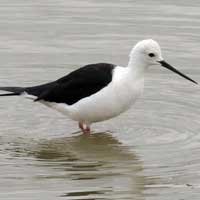
Wading bird with very long, red legs. Most birds are winter migrants from the north.
Speckled Mousebird
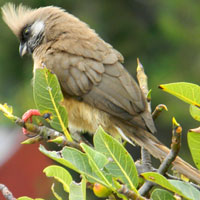
Long-tailed comical bird of gardens, orchards and forest edges. Eats much fruit.
Yellow-throated Sandgrouse
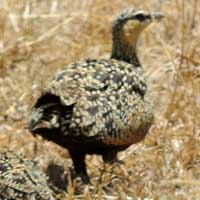
Large, heavy ground bird of savanna grassand areas. Pale yellow patch on throat; back and wings speckled.
Speckled Pigeon
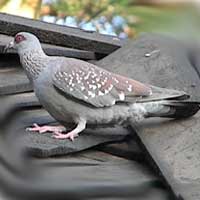
Large common pigeon with a distinct red patch around the eye and white spots on a gray and brown mantle.
Laughing Dove
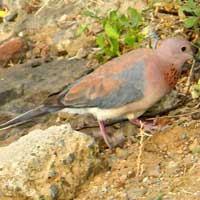
Smallish dove has orange bib with dark speckles. The wings are bluish and the remainder tawny-pink.
Meyer's Parrot
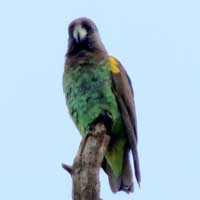
Head and back are chocolate brown. Yellow patches on shoulder. Groups of birds call noisily as they fly.
Fischer's Lovebird
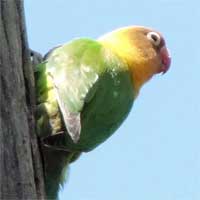
Small brightly marked parrot. Yellow head and green back. Populations of escaped and hybridized pets.
White-browed Coucal
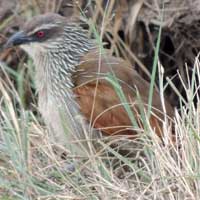
Medium-sized bird with a shaggy beard and collar and red eyes. Strong bill.
Red-chested Cuckoo
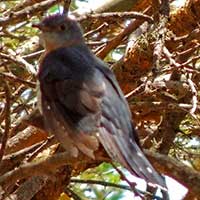
Upper chest is a brownish to cinnamon red. Back and wings are dark gray. Tail feathers have white tips..
Diederick Cuckoo
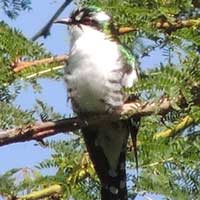
Belly and chest are white; Back and tail dark with patches of bright green. Cryptic in forested areas.
Ross's Turaco
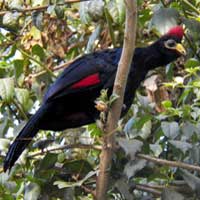
Large blue-black fruit-eater with a red crest and a bright yellow bill. Western Kenya forests and forest edges.
White-bellied Go-Away-Bird
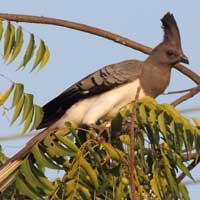
Large bird with a long tail and distinct white belly and dark chest/head. Occasional pest in orchards.
White-crested Turaco
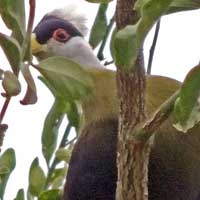
A large, striking bird with a broad dark tail. Fruit trees in lower hotter areas of western Kenya.
Double-toothed Barbet
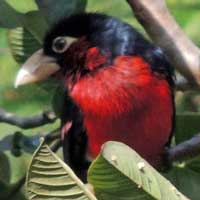
Long black tail, red chest and heavy white bill make this bird distinctive and exciting to observe.
D'Arnaud's Barbet
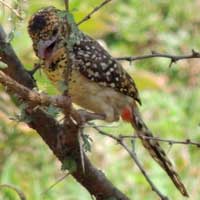
Smallish bird with heavy bill and long tail. Head yellow with black speckles. Lively songsters.
Yellow-rumped Tinkerbird
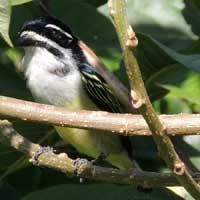
Two bold, white lines on face and a patch of bright yellow on the dorsum of the rump. Small bird with a very loud call.
Nubian Woodpecker
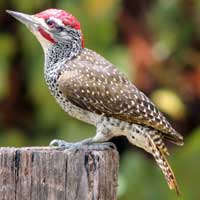
Back is greenish-brown with pale spotting, the chest white with dark spotting.
Gray Woodpecker
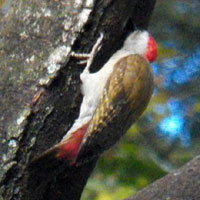
Chest and face are ashy gray and the back and wing covers are dark green. Just the males have red on head.
Cinnamon-chested Bee-eater
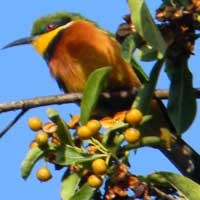
Colorful birds with upright, alert posture often perched in open to catch flying insects.
White-fronted Bee-eater
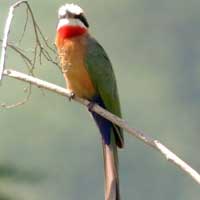
Snow white cap and band on throat above rosy-red patch. Long square tail. Sallies from perch to catch flying insects.
Little Bee-eater
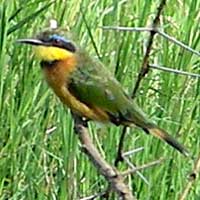
Brilliantly colored active bird that fly-catches bees and other insects. Back and crown are green and the tail is long. Very common through much of Kenya.
Lilac-breasted Roller
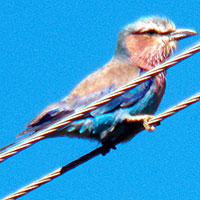
Medium-sized, very colorful bird that hunts shrike-style from utility poles or exposed tree branches.
Broad-billed Roller
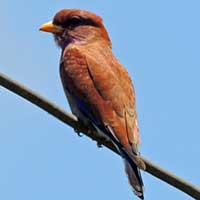
Stocky, richly brown, and with blue in wings. Bill is strong, yellow. Also called Cinnamon Roller.
Pied Kingfisher
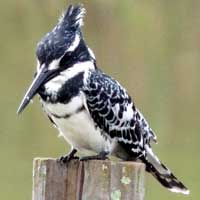
Hovers or perches near ponds or shallow streams diving into water to catch fish. Widespread and common.
Gray-headed Kingfisher
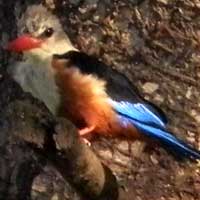
Rather large and quite spectacular. Bill orange-red with head and breast pale gray. Bright blue in wings.
Striped Kingfisher
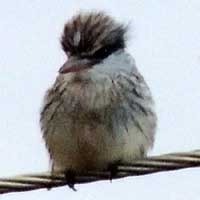
Stocky bird that sits on a high perch diving down to catch large insects. Crown is finely streaked.
African Hoopoe
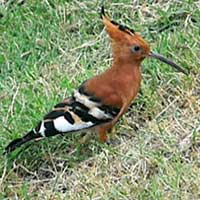
Colorful and distinctively shaped bird with big crest that can be lowered. Common in savanna areas.
Green Wood-Hoopoe
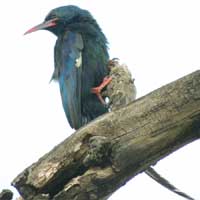
Long tail and red bill. Irridescent green on back and blue on chest may apprear dark depending on angle of light.
Red-billed Hornbill
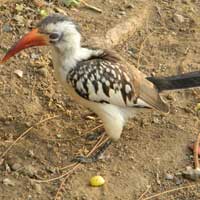
Large bird with an over-sized bill. Bill red and yellow without white tip. Notice white spots on the wing covers. Bold and inquisitive.
Jackson's Hornbill
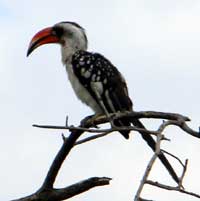
Large bird with an over-sized bill. Bill red and yellow with white tip. Notice white spots on the wing covers.
Black-and-White-Casqued
Hornbill
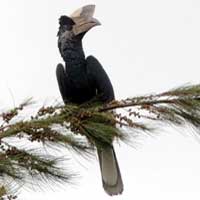
Very large black and white with a big crest on the top of the over-sized bill. Moist forest areas in western Kenya.
Common Bulbul
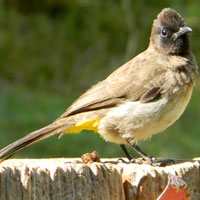
The head is dark brown, the belly mostly white and yellow under-tail coverts. Yes, a common Kenyan bird.
Somber Greenbul
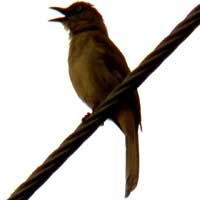
Drab greenish-yellow and brown bird with slightly curved bill and long tail.
Pygmy Batis
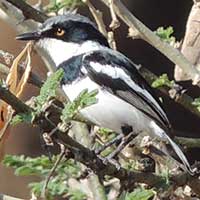
Very small black-and-white insectivore inhabiting semi-arid thorn scrub. White line above eye is short.
African Yellow White-eye
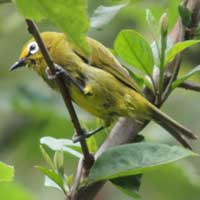
Small, mostly yellow-green bird with a broad, white eye-ring. Slenderbill used for actively gleaning insects from foliage.
African Black-headed Oriole
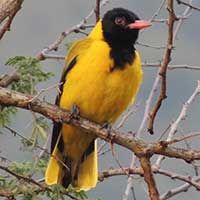
Unmistakeable black and yellow pattern with orange bill. Inhabits canopy of seasonally dry scrub or woodland.
Fischer's Sparrow-Lark ♀
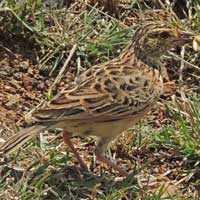
This female's plumage resembles dry grass. Males have a white patch on side of face.
Fawn-colored Lark
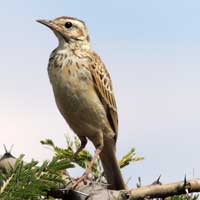
Upright posture, medium slender bill and open-country habitat. Reddish brown back and head, distinct eye stripe and faint streak spots on upper chest.
Barn Swallow
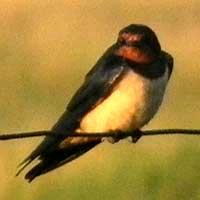
During the northern hemisphere winters this common bird is among those wintering in Kenya. Long, deeply forked tail.
Striped Swallow
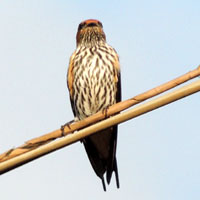
Dark vertical streaking on the throat and chest are unique. Rump and head brick red. Common around buildings.
Mosque Swallow
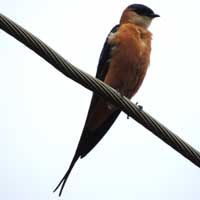
Chest and belly cinnamon. Pale cheek area and bluish head cap doesn't extend below eye.
African Pipit
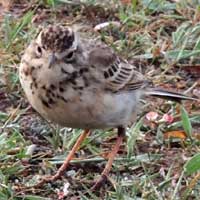
Small bird with dark streaking on off-white. Bill is fine-pointed for catching small insects. Feeds on ground in grasslands.
African Pied Wagtail
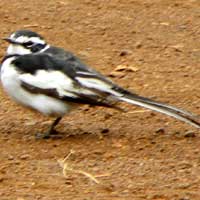
Common bird of parks, lawns, pastures and farmland. Pumps long tail up and down as it forages along ground.
Mountain Wagtail
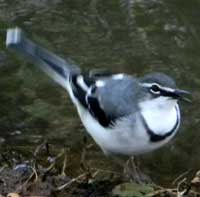
Note the black ring around the collar. Forages for insects and spiders along mountain side streams.
Yellow Wagtail
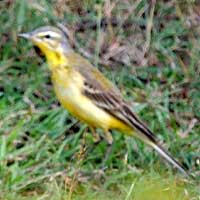
Palearctic migrant. Variable yellow, black and white bird with fine bill that forages for insects at ground level in open areas.
Pied Babbler
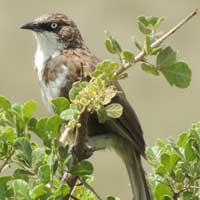
Thrush-like with dark brown and white plumage. The pale eye is conspicuous within gray-brown cap.
Brown Babbler
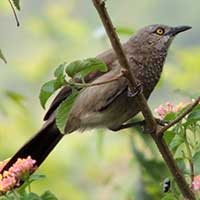
Nearly uniform gray-brown with light speckling on chest. Yellow eye.
Olive Thrush
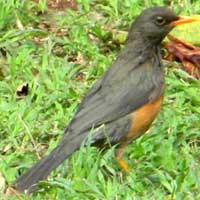
Strong, orange-red bill used for probing for invertebrates in the soil. Very common. Also feeds on fruits.
Cape Robin-Chat
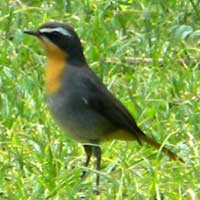
Like robins everywhere these birds forage in lawns for invertebrates. Broad white stripe above eye. Common
Mocking Cliff-Chat
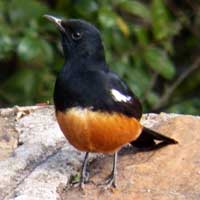
Ebony head, upper chest, back and tail contrast sharply with rusty orange lower belly. There's also a white patch in the wing.
Northern Wheatear
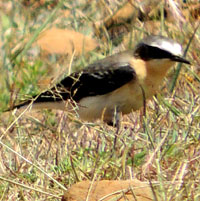
A bit of tawny on an upright, ground- dwelling bird found in open country. Migrant in Kenya from northern hemisphere winter.
African Dusky Flycatcher
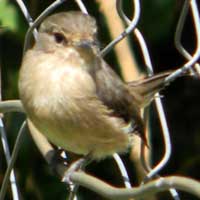
Small, pale, grayish brown bird with a fine bill. Alights on a low, open perch and sallies out after small flies. Common
Common Stone Chat
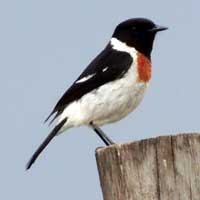
Common fly-catcher of open rocky areas. Black head and back contrast sharply with white belly and upper orange upper breast.
White-eyed Slaty Flycatcher
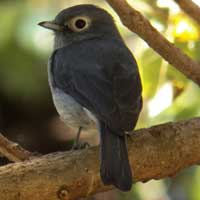
The eye is actually black, but there is a broad white ring around the eye. Highland forests and gardens.
Gray-backed Camaroptera
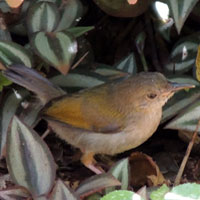
Common bird of dense undergrowth with olive wings. Broad, flat bill tapers to slender tip. Back and head gray.
Winding Cisticola
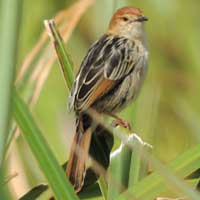
Back is mostly black with lighter colored feather edges. There is a rufous (reddish-brown) in the mostly dark wings and top side of tail. Rufous on crown and nape.
Red-faced Cisticola
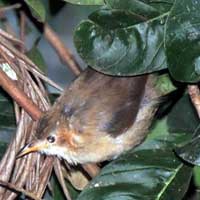
Plain back and breast - no streaking. Rufous patch just behind and below eye. Long tail. Inhabits dense vegetation as in swamps.
Tawny-flanked Prinia
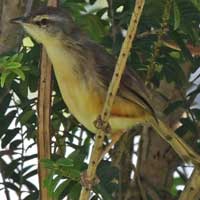
Small, high energy bird with long tail calls frequently as it forages through dense vegetation.
Gray-capped Warbler
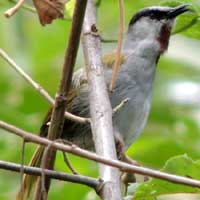
Slender, slightly curved bill. Brick-red patch in throat. Back is olive-green. Often in dense foliage feeding on insects.
Brown Parisoma
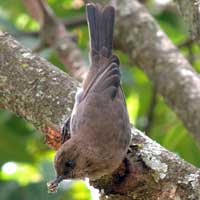
Small, plain brown bird with a slender bill. Very active gleaner of insects from tree foliage.
White-bellied Tit
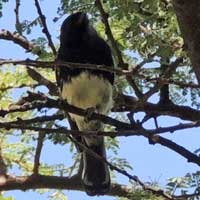
Bicolored bird with small slender bill. Forages for small insects in foliage of trees.
White-crested Helmet-shrike
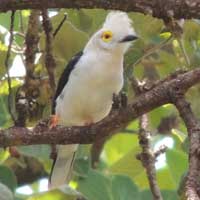
Small, plain brown bird with a slender bill. Very active gleaner of insects from tree foliage.
Brown-crowned Tchagra
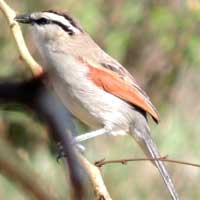
Head is alternately stiped with white, brick red and gray-brown. Strong bill with slight hook at tip.
Common Fiscal
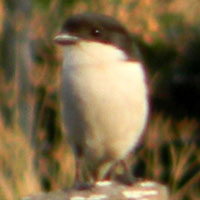
Common and conspicuous bird of farmlands and suburbs. Sharply black and white. Heavy, black bill.
Common Fiscal (juv)
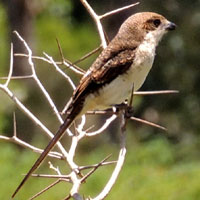
Juvenile, immature fiscal is brown and very light gray. Grasslands and pastures.
Long-tailed Fiscal
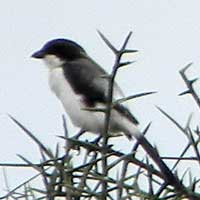
Open grassland with scattered trees is habitat for this white, black, and gray bird. Hooked beak and long tail.
Gray-backed Fiscal
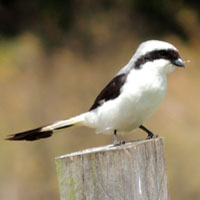
Larger than common fiscal and with a distinct gray cap extending down back like a hood. Strong, hooked beak.
Pied Crow
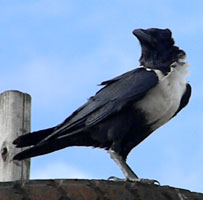
Large black and white birds ('pied') with heavy bill and often somewhat gregarious. Visits human-disturbed habitat like agricultural fields, cities and refuse dumps.
Cape Crow
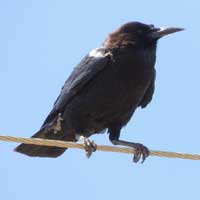
Prefers open areas such as pastures and plowed fields. Slender bill. Mostly black but with some dark brown on head.
Fan-tailed Raven
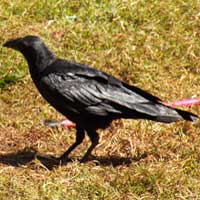
All black with heavy bill, broad wings and short wide tail. Rocky hills and cliffs in northern Kenya.
House Crow
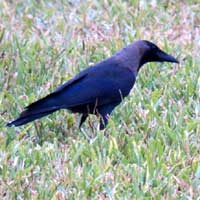
Glossy black and brown crows with heavy bill. Becoming abundant especially in coastal Kenya in cities and refuse dumps.
Common Drongo
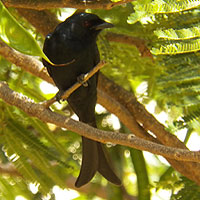
Glossy black bird with upright posture and distinctly forked tail. Eyes reddish.
African Paradise Flycatcher
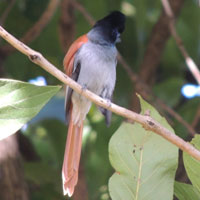
Showy, active, bird with upright posture. This female lacks the very long tail feathers of the male, but shares the rusty back and tail. Common.
African Blue Flycatcher
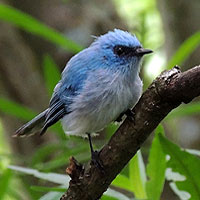
Small, sprite and very active insect-eating birds. Sky blue head, back, tail and chest; lower belly paler blue. Common in moist places.
Greater Blue-eared Starling
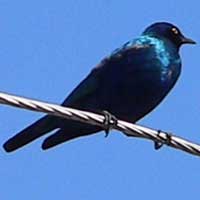
A glossy blue-black bird with a short tail and bright yellow eye. Iridescent colors vary depending on light direction. Darker blue patch behind ear.
Superb Starling
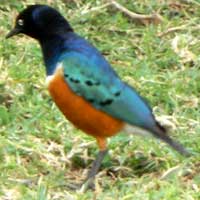
Very common bird of savannas, pastures and farmland. Photogenic & easily recognized.
Red-billed Oxpecker
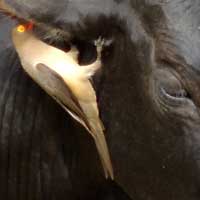
Red-lipstick beak and habit of foraging on large ungulates for ectoparasites make this bird unmistakable.
Rufous Sparrow
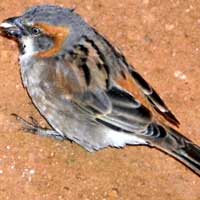
Swatch of reddish brown on side of face, gray head, black throat patch. Small, common, seed eater in highland area gardens.
Gray-headed Sparrow
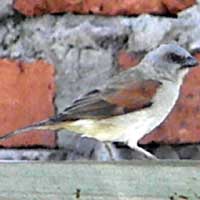
Common to abundant gray-brown bird of gardens, farms and old fields. Noisy. Conical bill for seed eating.
House Sparrow
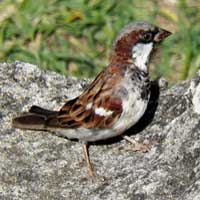
Female lacks the black throat patch of the male and is paler overall. Closely associated with urban habitats.
White-headed Buffalo-Weaver
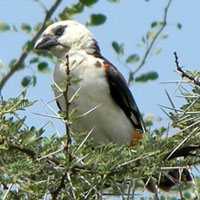
Large, heavy black bill offset by snow-white head and chest. Rust orange on rump and coverts. Semiarid regions.
White-browed Sparrow-Weaver
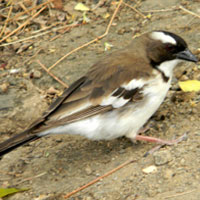
Rich coffee brown back and tail. White stripe above the eye. Common seed eater often foraging on ground.
Baglafecht Weaver
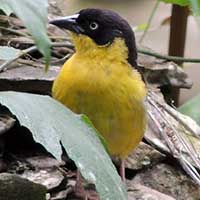
Largely yellow with heavy conical bill. Black mask thru pale eye. Very common seed eater.
Eastern Golden Weaver
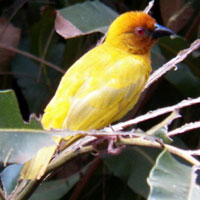
Largely golden-yellow with thick, black bill and burnt orange on face. Weaves nests near water.
Village Weaver ♂
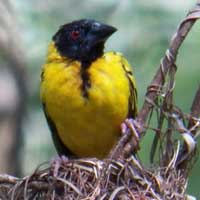
Male in breeding plumage is bright yellow with black face and throat. Gregarious nests of intricate stems and grass.
Fan-tailed Widowbird ♂
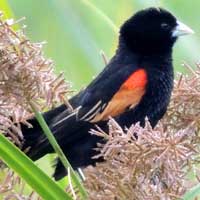
Breeding male. Black with orange-red shoulder patch and wide tail. Marshy areas.
Southern Red Bishop ♂
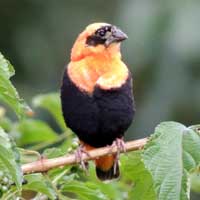
Weaver birds with chest, throat, head and nape are bright red-orange. Heavy conical bill. Two similar species
Streaky Seed-eater ♂
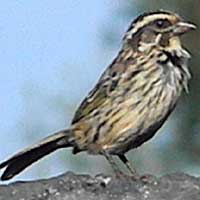
Common finch of highland gardens and farms. Note the thick bill, the broad white eyebrow, and the prominent streaking.
White-bellied Canary
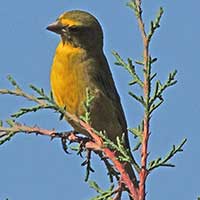
Conical bill for seed eating. Lower third of belly is white while upper half is yellow. Back is greenish.
Cinnamon-breasted Bunting
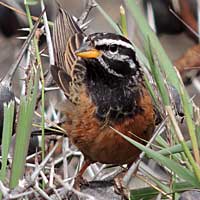
Black head with white facial stripes, a conical seed-eating bill, and bright rusty-orange breast. Savanna and grassland.
Red-cheeked Cordon-bleu
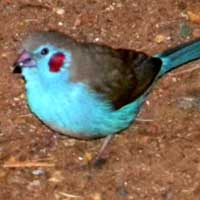
Oval patch of red on either side of face. Only the males, like this one, have the 'red cheek'.
Purple Grenadier
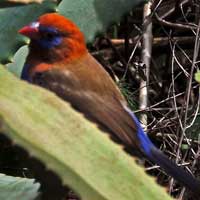
Small bird with intense blue on lower breast, belly and rump of males. Bill is conical and red or partly red.
Red-billed Firefinch
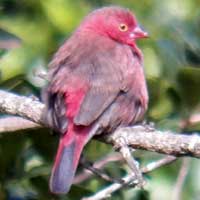
Small red (males) or grayish-red birds feeding often on ground. Lower mandible red. Common in towns.
Bronze Mannikin
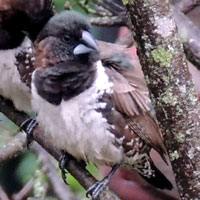
Very small, seed-eating birds with rich, chocolate brown head, wings and back. Lower chest and belly white.
Village Indigobird
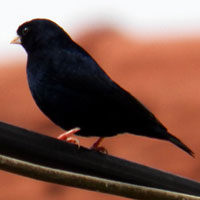
Small birds, about 11cm. This is the male, glossy black-blue, light-colored conical bill, and orange legs. Female is brown.
Pin-tailed Whydah ♂
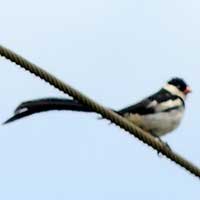
My photo is bad, but this amazing little bird is easily recognized! Non-breeding male and females are brown w/o long tail.
Variable Sunbird ♂
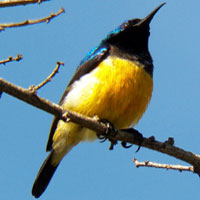
Probably the most common sunbird. Yellow on belly may be dull or bright. Sharply curved bill used for flowers.
Amethyst Sunbird ♀
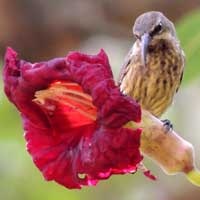
Dark streaks on pale yellow breast and with long curved bill for getting nectar.
Double-collared Sunbird ♂
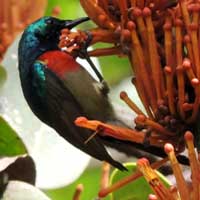
A bright red band on the chest above gray belly. Head and back are iridescent blue-green.